

Vegan Mafe
Ingredients
1 onion, diced
1 red bell pepper, chopped
3 cups (350g) mushrooms, quartered
1/2 cup (125g) peanut butter
2 cups (475ml) vegetable broth
2 tbsp tomato paste
1 tsp chili powder
Salt
Pepper
Instructions
- Heat oil in a pan over medium heat. Add the onions and saute until soft (4-5 minutes).
- Add the pepper and mushrooms, cooking until the mushrooms get dark (3-5 minutes).
- Add the tomato paste and chili powder, and give everything a mix. Add the broth and the peanut butter, raise the heat to medium-high, and cook until the peanut butter is blended into the broth (~5 minutes).
- Serve over rice.
A longer and more detailed description
Peanut butter is one of those ingredients that I was initially sceptical of. It’s such a specific thing that exists in such specific contexts that it’s easy to forget that no, it’s a versatile and delightful food. The more I cook with it, the more of a fan I become, and I hope the same is true for you.
Today is another peanut butter recipe, this time not paired with greens or noodles, but with my best approximation of meat. Start by doing the thing we always do of heating up oil and chunking some onions into it. Once you get tired of waiting for the onions to do something, add the pepper and mushrooms, letting all of them get to know each other in the pan. Once that gets boring, slather them in tomato paste and chili powder, giving it all a mixy mix before drowning them in broth and peanut butter. Mix it all together once again, let the peanut butter melt, and serve over rice. K’i ni hɛrɛ bɛn!
Substitutions and Suggestions
For the mushrooms - Mushrooms were a bit of a weird choice here. In our various forays into African cuisines, mushrooms rarely appear. Why that is, I’m not sure, since there obviously are mushrooms in Africa. I chose mushrooms here because I like them, but I don’t think they were the best choice. Tempeh would probably work better (which I did not choose because I do not like tempeh), as would baked tofu. You could also potentially try butternut, but I had a hard time thinking about how that would interact with the peanut butter. You could also forego a protein substitute entirely and just add extra onions and peppers. Really, anything that adds some body to it all would work nicely here.
What I changed to make it vegan
Mafe is supposed to be made with beef. I substituted in mushrooms with mixed results. The end result is good, don’t get me wrong, but it’s not perfect.
What to listen to while you make this
I have two recommendations here. The first is the ever iconic Tinariwen, who have an absolutely wild story that is fantastic and fascinating. While not every member of the band is Malian, they are all Tuareg, an ethnic group from southern Libya and Algeria and northern Mali. They are also almost single-handedly responsible for the rise of desert blues, a genre of music combining specifically Tuareg sounds with American blues music to tell the story of the Tuareg people. They are icons and worth celebrating for their influence on music and ensuring African voices are heard outside Africa.
The second recommendation is Oumou Sangare. Sangare is a Wassalou singer, a musical tradition sung by women about women’s issues, including motherhood, women’s rights, and freedom of marriage. Her style of music reflects a different tradition than Tinariwen but one that is no less reflective of Mali and the experience of people there. While she hasn’t necessarily founded entire genres like Tinariwen, she has nevertheless popularised Wassalou and ensured the voice of Mali is heard well beyond its borders.
A bit more context for this dish
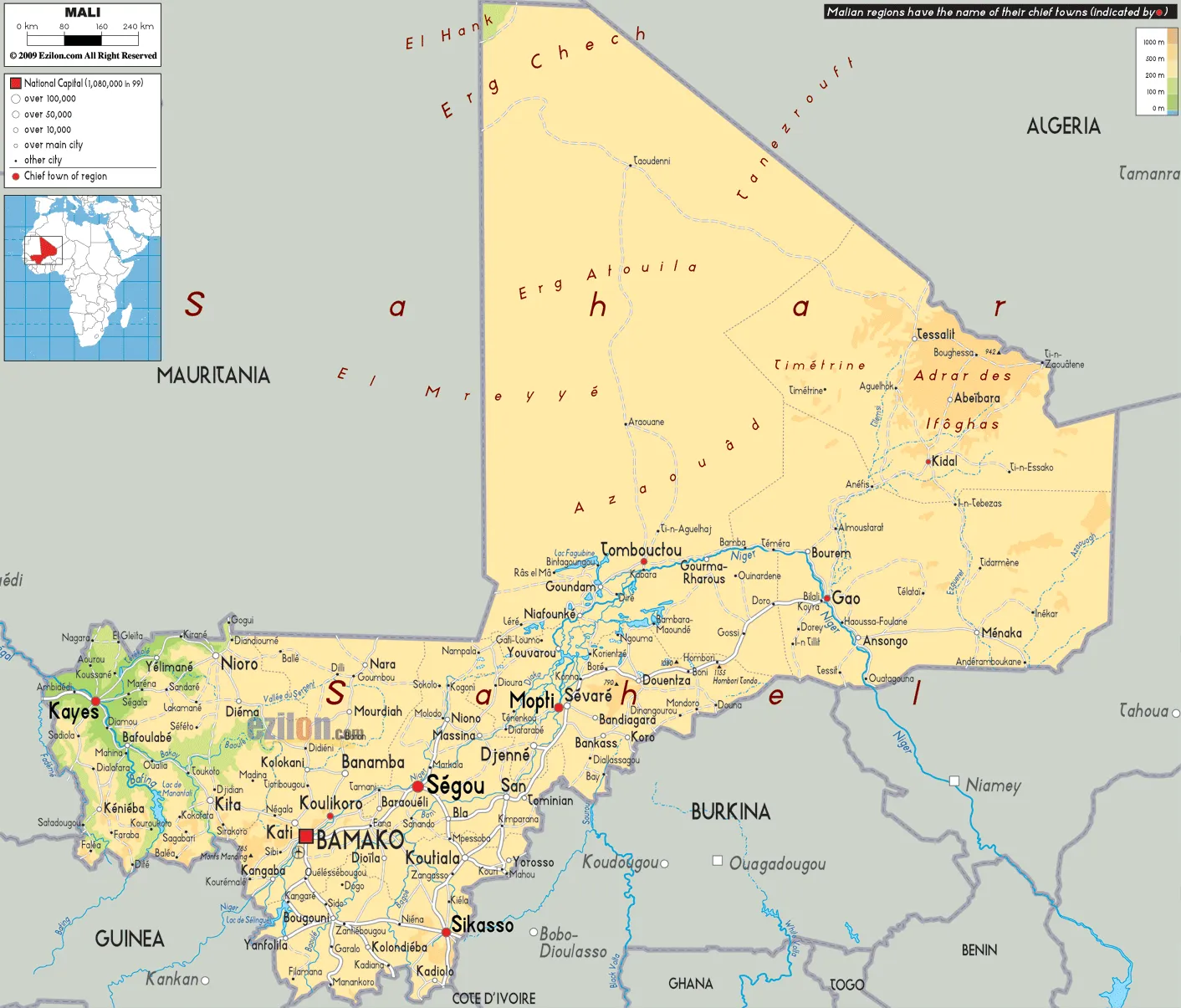
Mali is a geographically diverse country, and its cuisine reflects this. Its northern regions extend deep into the Sahara, with northern cuisine being defined by what’s available in nomadic lifestyles and the barren north. Its southern regions are firmly rooted in west Africa, dominated by groundnuts, jollof rice, and fruit. Its cuisine makes heavy use of rice and grains, as well as incorporating meats and tomato. Meals are generally a sauce served over rice, with the sauce heavily featuring peanuts, tomatoes, leaves, or onions.
Mali is, however, a former colony of France, and French cuisine has left its indelible mark. Baguettes are common throughout Mali, though perhaps less so than in other former French colonies.
With this, though, comes the question of whether Mali is a former French colony. Mali, like so many other French colonies we’ve discussed in this series, while ostensibly independent has nonetheless been subject to French control and influence long past its supposed freedom from its colonial master. France has consistently and persistently intervened in Malian politics, sometimes at the request of Malian leaders, and other times, less so. There’s a question to be asked about what feeds domestic politics, and what the role of former colonisers is.
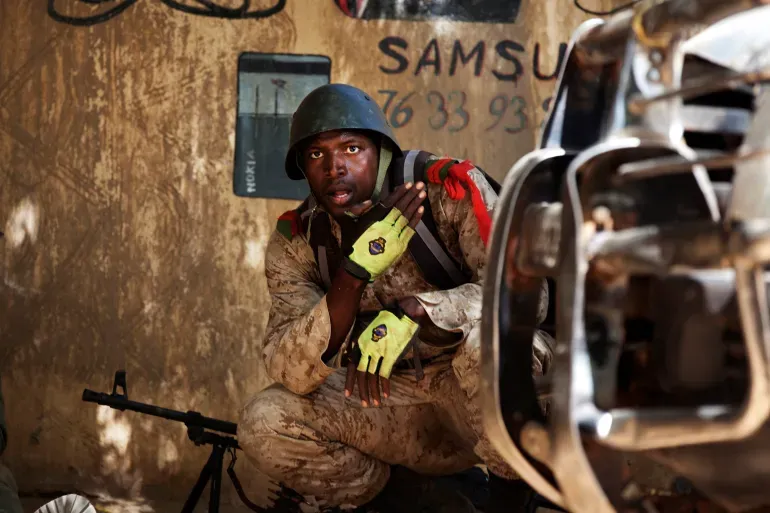
Mali gained its independence from France on 20 June 1960, with Modibo Keita being elected as its first president. Keita immediately sought to sever Mali from its colonial ruler as much as possible, establishing an independent currency and implementing a socialist regime. He was also, however, a dictator, with his rule being followed by a military dictatorship and general unrest. For the next thirty years, Mali would struggle under two dictators, an increasingly unstable economy, and a combination of famine and drought. When Mali’s second dictator, Moussa Traore, was overthrown in a coup, this was seen as a chance for a new beginning for Mali. Indeed, for the next two decades, Mali was reasonably stable, holding democratic elections, with presidents cycling in and out of power.
Mali is, however, a widely diverse country, both ethnically and geographically. While the north is more sparsely populated, many of those who live there are part of the Tuareg ethnic group. The Tuaregs are traditionally nomadic herders, living in the desert, moving from place to place as they find water and food for their herds. They have historically been a people attached to and reliant upon the land. As with many nomadic and pastoral peoples, climate change has hit particularly hard, with drought forcing them out of Mali and into Libya, Algeria, and Niger.
Upon arriving in Libya, however, the Tuareg attracted the attention of Muammar Gaddafi, the then dictator of Libya. Gaddafi had a fascination with the Tuareg, and so made a promise - any Tuareg who signed up for the Libyan military would receive special training and lots of support. The Tuareg, sensing opportunity, agreed and signed up in droves, becoming highly skilled soldiers.
As drought abated, and Gaddafi was thrown from power, and the Tuareg returned to Mali, the consequences of the past decades of stability had become clear. Mining had become more and more prevalent across the north, destroying the lands the Tuareg needed for their herds, leaving few options for them. The Tuareg were, however, also now heavily armed and well trained. Inspired by Arab Spring and the knowledge that regime change was possible, the Tuareg declared the north to be independent, establishing the state of Azawar, and preparing to defend it by force. The Malian president sent troops in to re-establish control, leading to the Mali War.
One caveat, however, was that the Malian government had neither enough troops nor enough resources to fight a war in the north. Instead, after overthrowing the president in a coup, the Malian military turned to France, asking them for resources to fight the Tuareg and Islamist rebels. France obliged in what is now known as Operation Serval.
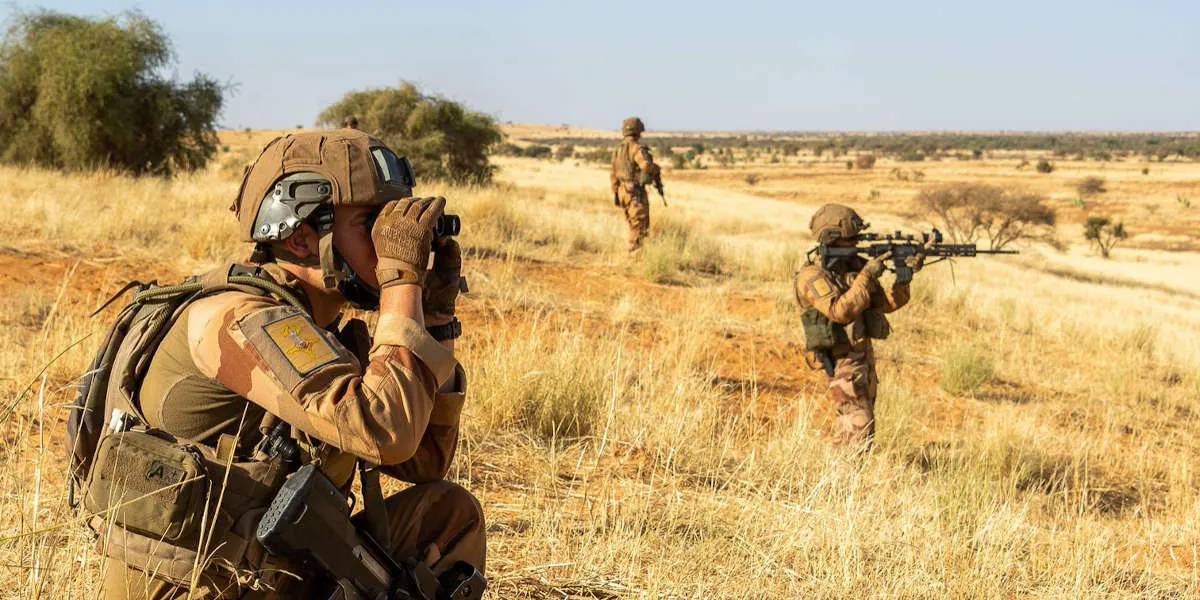 French troops in the Sahel (Source: Armee Francaise)
Over the course of the next eight years, French troops worked with Malian troops to push back the Tuareg and Islamist rebels. In doing so, however, Mali became further destabilised, with militias popping up throughout the country. Mali was not the only country in which France was conducting military operations, with French bases being spread throughout the Sahel, though each of these inflamed tensions in the region in its own way. By the 2020s, the presence of the French itself became a political headache, with coups being conducted over what to do about the French. In August 2020, Mali’s president was overthrown in a coup, with the new military junta being uninterested in the French presence in Mali. By May 2021, the new Malian government had called in the Wagner Group, which was all too happy to continue fighting and looting its way across northern Mali. France was evicted from Mali, with the new Malian government removing French as a national language. The situation in Mali has not stabilised, with Mali becoming a hotbed of extremism, mercenaries, and terrorism. What had started as the Tuaregs demanding independence and recognition has turned into a potential genocide waiting to happen, with the conflict becoming a deeply ethnic one.
Throughout this, the intervention of foreign powers has not helped the situation. Both the Wagner Group and French forces acted in their own interests as much as Mali’s, and the addition of foreign troops succeeded in adding more guns and more death to an already bloody conflict. At the same time, while it’s easy to criticise the Wagner Group, there is always the question of whether the presence of the French troops potentially prevented a genocide, and how much worse things might have been otherwise. It is not, after all, European intervention that led to the Malian civil war, but the long arm of Arab Spring and its far-reaching consequences for the entire Arab world.
What the future of Mali holds is anyone’s guess, though hopefully, there is a chance for peace. The people of Mali keep calling for it. Hopefully, the powers that be will listen.